
November 16, 2026
Key Takeaways
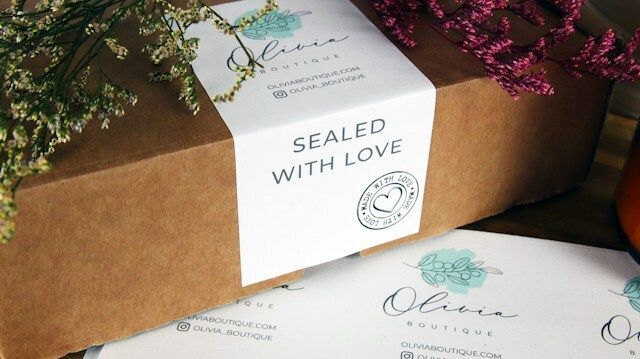
Tamper-evident packaging uses seals, labels, or structural features that show visible signs once a product is opened. It protects customers and helps retail brands earn shelf trust.
- OTC drugs, delivered food, and cannabis often require tamper-evident seals.
- Common types include destructible labels, shrink bands, and tear strips.
- Match adhesives to container materials and cold or humid storage.
- Seal every entry point and make seals distinctive to your brand.
A shopper picks up a jar of salsa, a bottle of vitamins, or a sealed salad—but before anything else, they check the seal. A popped lid, a torn neck band, or a label that’s already been lifted can send that product straight back to the shelf. Most people won’t take the risk, even when the product inside is perfectly fine.
That split-second check puts real pressure on your packaging design. The seal has to show clear signs of tampering, hold up through shipping and storage, and still open without a fight once the customer gets it home. It also has to look like it belongs to your brand.
This guide covers what tamper-evident packaging is, which products need it, the most common seal types, and the design choices that keep your packaging secure without hurting shelf appeal.
What Is Tamper-Evident Packaging?
Tamper-evident packaging is packaging with one or more indicators or barriers to entry that leave visible evidence if someone opens or alters it. Essentially, by the FDA’s own definition, a shopper should be able to look at the package and tell, right away, whether it’s been opened.
What "tamper evident" means in practice
The seal is built to show damage: a shrink band tears, a label breaks into fragments, a carton strip won’t go back into place. The FDA moved away from the older term “tamper-resistant” in the 1990s for this exact reason. A determined person can get into almost any package, so the goal shifted to making that intrusion obvious to the next person who picks it up.
Which Products Need a Tamper-Evident Package?
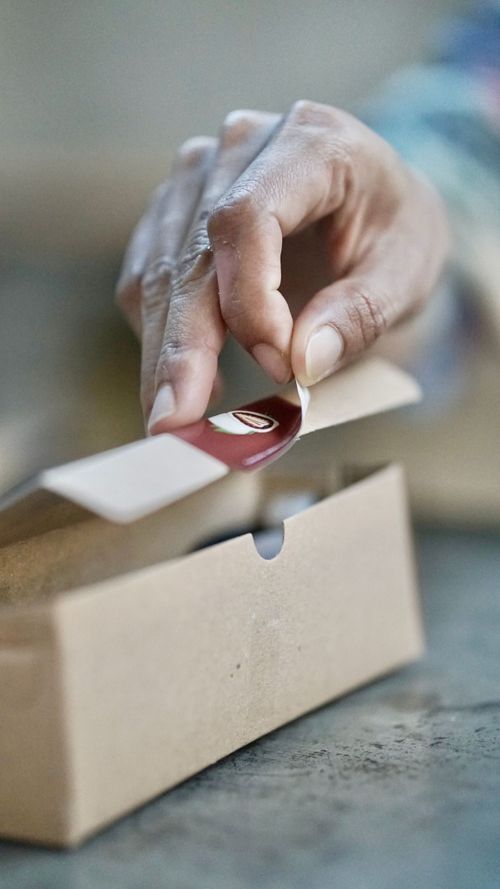
Some categories are legally required to use tamper-evident features. Others aren’t, but shoppers expect them.
- Over-the-counter (OTC) drugs: Federal rules require most OTC drugs sold at retail to come in tamper-evident packaging, with a label statement that tells consumers which feature to look for. A few categories are exempt, including dermatological products, toothpaste, insulin, and lozenges.
- Third-party food delivery in California: Under AB 3336, restaurants have had to close ready-to-eat food bags and containers with a tamper-evident method before handing them to a delivery driver since January 2021.
- Cannabis products: Many states with legal cannabis markets require packaging that’s both tamper-evident and child-resistant.
- Supplements, cosmetics, and grab-and-go food: Seals aren’t always mandated here, but customers have learned to look for them. A missing seal on a protein tub or a deli sandwich reads as a red flag.
Requirements vary by state and product category, so it’s worth confirming the rules that apply to your specific product before you finalize a design.
7 Common Types of Tamper-Evident Labels and Packaging
The right seal depends on two things: what the container is made of, and how your customer opens it. Most brands combine a few tamper-evident solutions instead of relying on one. Here are the most common options.
1. Destructible vinyl labels
These labels use an ultra-thin face stock that breaks into small pieces when someone tries to peel them. Since they can’t come off in one piece, they’re a popular choice for sealing carton flaps, jar lids, and electronics enclosures.
2. Security inks and anti-counterfeiting labels
Some seals rely on what’s printed on them as much as how they’re cut. Security inks can bleed, shift color, or reveal a hidden mark when someone tries to lift or dissolve the adhesive.
Consecutive numbering, barcodes, and holographic foils go a step further, making each seal traceable and difficult to copy. This matters most for high-value or frequently counterfeited products.

3. VOID labels and tape
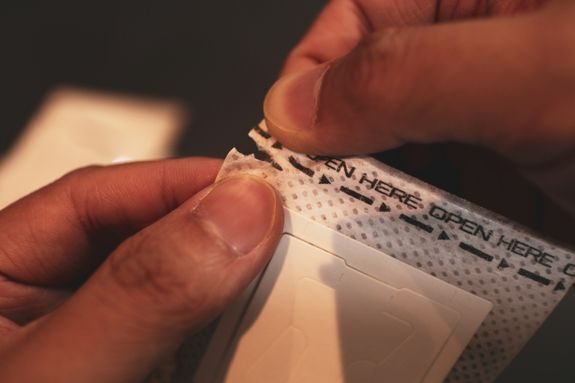
Peel one of these off, and a hidden message (usually “VOID” or “OPENED”) stays behind on the surface and on the label itself. They work well on shipping cartons, delivery bags, and high-value retail boxes, where you want proof that holds up even if someone tries to reapply the seal.
4. Heat shrink bands and sleeves
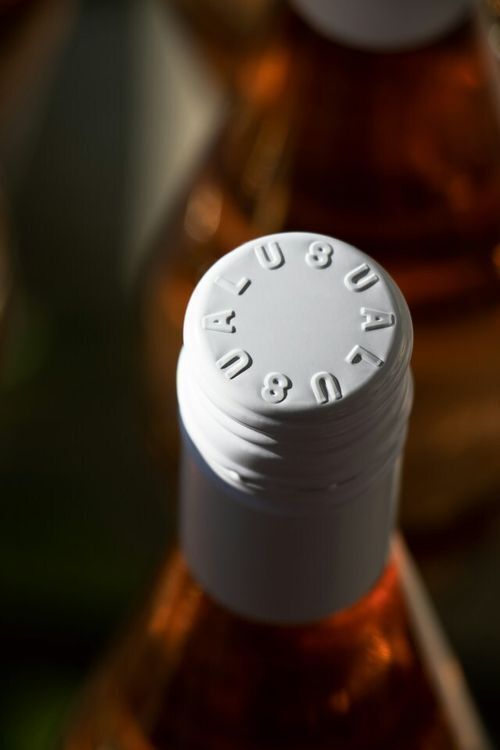
A shrink band wraps around a bottle neck or cap, then tightens with heat. Many brands pair it with a perforated tear line on a full-body shrink sleeve, so the customer gets an easy opening point while any earlier break stays obvious.
5. Tear-strip folding cartons
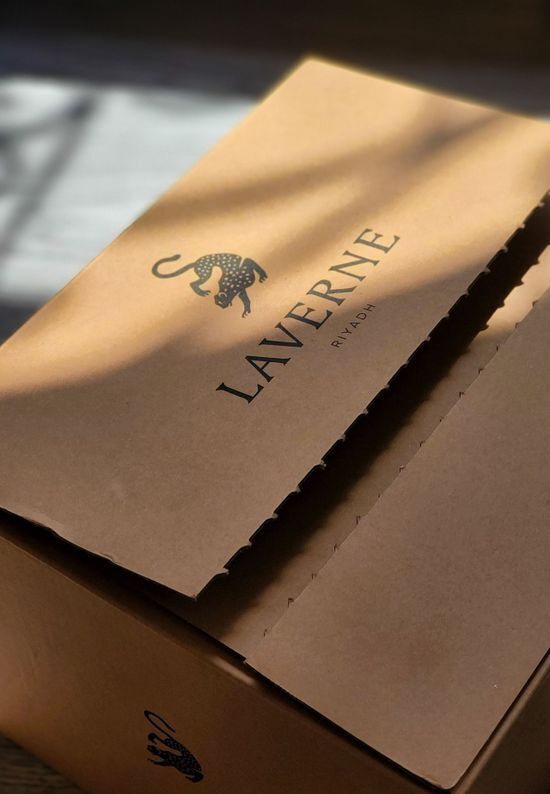
A perforated strip is built right into the carton’s structure. Once someone pulls it, the box can’t be closed back to its original state. It’s also a smart way to cut secondary plastic overwrap.
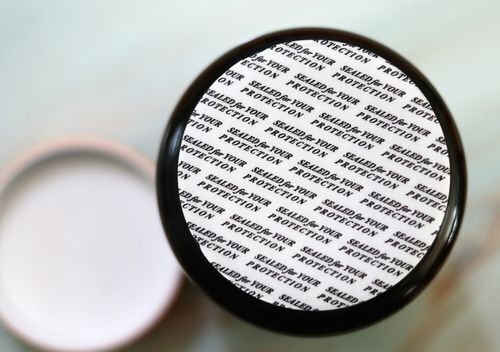
6. Induction inner seals
A foil liner is bonded to the rim of a jar or bottle under the cap. Your customer has to puncture or peel it to reach the product, which makes it a staple for supplements, sauces, and OTC products.
7. Breakaway caps and rings
The cap connects to a ring that snaps off on first twist and stays on the bottle neck. You’ll see these on beverages, dairy, and household products.

Tamper-Evident Packaging by Container Type
| Container | Best-Fit Seal | Why It Works |
|---|---|---|
| Glass jars | Induction inner seal + shrink neck band band shows outside tampering, the liner protects the product itself | Two layers of evidence; the band shows outside tampering, the liner protects the product itself |
| Plastic bottles | Breakaway cap ring or perforated shrink band | Breaks cleanly on first opening without extra tools |
| Paperboard cartons | Tear-strip or destructible label across flaps | Built into the structure, so there’s no easy way to reseal |
| Destructible label across the seam or tear-away tabs | Destructible label across the seam or tear-away tabs | Clamshells close tightly but reopen easily without a seal |
| Delivery or paper bags | VOID-reveal or destructible sticker across the fold | Simple to apply at the counter, hard to hide once broken |
Choosing the right seal is half the work; producing it accurately at scale is the other half. As a full-service provider of printing services, Intermedia Print Solutions produces custom product packaging and security labels built for this kind of work, including tamper-evident stocks, security inks, anti-counterfeiting labels, and consecutively numbered or barcoded seals. Our durable label options also hold up in cold and humid storage, where standard labels tend to fail.
5 Tips for Tamper-Evident Design
A seal only works if it fits the package, survives storage, and still makes sense to the person opening it. Keep these in mind as you plan your design.
1. Seal every entry point
A label on the top flap means little if the glued bottom flap or side seam opens cleanly. Before you finalize a design, try to open your own prototype without breaking the seal. If you can, so can anyone else.
2. Build the evidence into every structure
Tear strips, perforated panels, and locking tabs make tampering visible without adding extra material. They can also replace plastic overwrap, which trims costs and gives customers a cleaner unboxing.
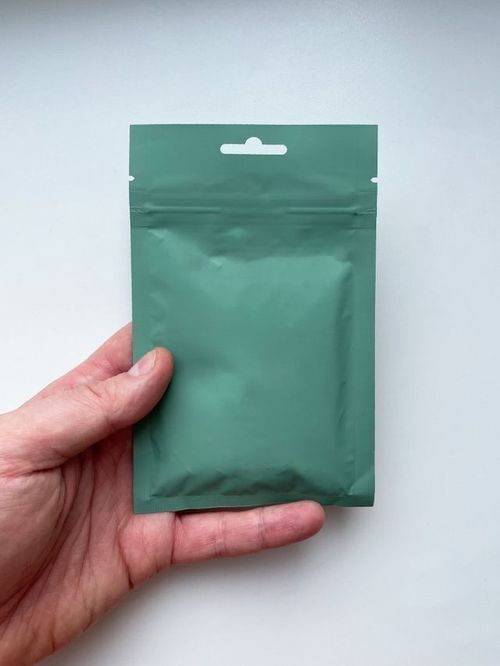
3. Match adhesives to the container envrionment
Standard labels often fail in freezer aisles. Frost and condensation form a thin layer of moisture between the label and the surface, so the adhesive never bonds properly. Plan around:
- Container material: glass, plastic, and coated paperboard each need different adhesive properties
- Application temperature: a label rated for freezer storage may still fail if it’s applied to an already-cold surface
- Humidity and temperature swings: products that move from cold storage to a warm store need a construction built for both
4. Make the seal distinctive
Plain, generic seals are easy to replace with an identical one. Custom logos, brand colors, or printed patterns turn your tamper-evident features into something a bad actor can’t easily copy, and they reinforce your branding while they’re at it.
5. Tell shoppers what to look for
A short line like “Do not use if seal is broken” sets clear expectations. For OTC drugs, this labeling statement is required. For other products, it’s a simple way to signal care and help customers spot a problem before they open the package.
Sealed with Confidence
Shoppers judge a seal in seconds, and they rarely give a product a second chance once it looks compromised. The strongest tamper-evident designs hold up on three fronts at once: they show clear evidence of opening, they survive real storage conditions, and they still let the right customer get in without a struggle. Get all three right, and the seal becomes one of the quieter reasons people trust your brand enough to buy again.
Intermedia Print Solutions is a print shop in Princeton that produces custom labels, shrink sleeves, and folding cartons, with specialty finishes like security foils and holograms available to make your seals harder to copy. Our team can help you match the right seal, material, and adhesive to your container and storage conditions before your first production run.
Ready to secure your next packaging run? Request a quote or place an order today.
Tamper-Evident Packaging: FAQs
What does tamper-evident mean on packaging?
Tamper evident means a package shows visible proof if someone has opened or altered it. A torn band, a broken label, or a pulled tear strip tells shoppers the product may not be safe to use.
What are some tamper-evident packaging examples?
Common examples include shrink bands on bottle necks, foil inner seals under jar lids, breakaway cap rings, tear-strip cartons, and destructible or VOID-reveal labels. Many brands combine two or more for stronger protection.
Is tamper-evident packaging required by law?
It depends on the product and location. Federal rules require it for most over-the-counter drugs, California requires it for food delivered through third-party apps, and many states require it for cannabis. Check the rules for your product category and every state you sell in.
Why do tamper-evident labels fail in the freezer?
Frost and condensation create a thin layer of moisture between the label and the package, so standard adhesives can’t bond properly. Labels built for cold storage, and applied before the product is chilled, hold up much better.
What's the difference between tamper-evident and tamper-proof?
Tamper-evident packaging shows signs that someone opened it, while tamper-proof suggests a package can’t be opened at all. The FDA uses “tamper-evident” because almost any package can be breached; the realistic goal is making that breach obvious.